

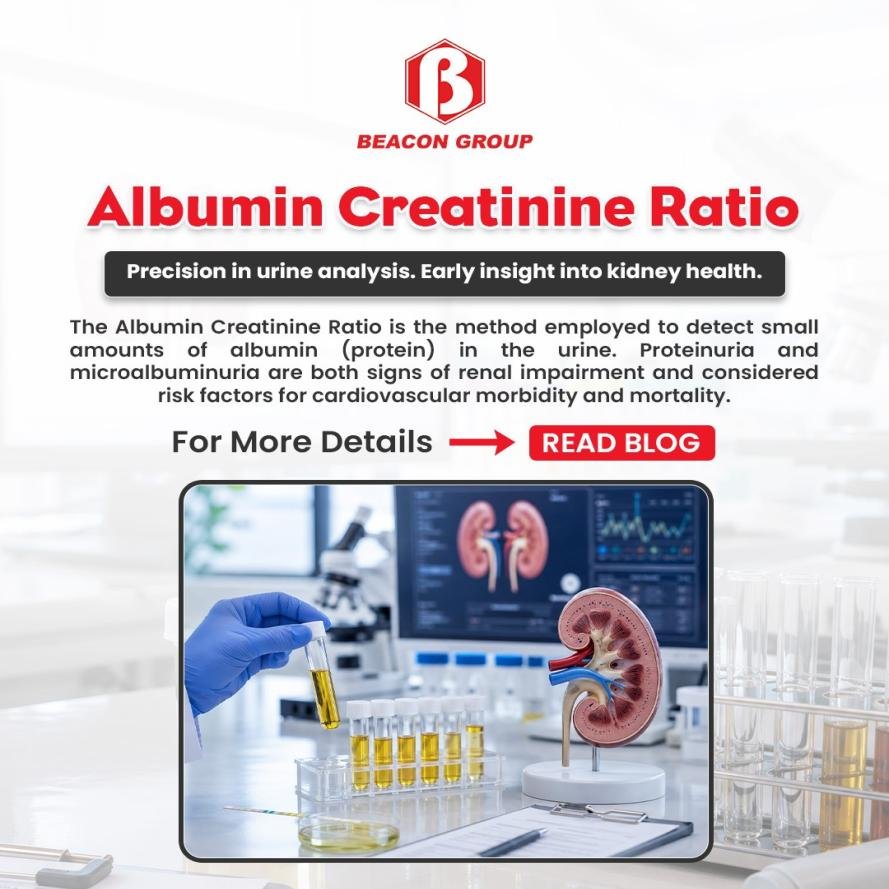
The Albumin Creatinine Ratio is the method employed to detect small amounts of albumin (protein) in the urine. Proteinuria and microalbuminuria are both signs of renal impairment and considered risk factors for cardiovascular morbidity and mortality. Its measurement is also part of diagnosis, staging and monitoring of chronic kidney disease (CKD).
Albumin-to-creatinine ratio is the first method of preference to detect elevated protein and is calculated by dividing albumin concentration in milligrams by creatinine concentration in grams.
Albumin Creatinine Ratio = Albumin in mg/dL / Creatinine in g/dL
Category | ACR (mg/g) | Description | Findings |
| A1 | <30 | Normal to mildly increase | The normal urine ACR in young adults is less than 10 mg/g |
| A2 | 30-300 | Moderately increased | Microalbuminuria is albumin excretion above normal range but below level of detection by total protein tests. |
| A3 | >30 | Greatly Increased | Macroalbuminuria indicates a higher elevation of albumin associated with progressive decline in glomerular filtration rate. |
Patients with diabetes, hypertension, acute kidney injury, cardiovascular disease, recurrent renal calculi or family history of end-stage kidney disease should be tested for proteinuria via Albumin Creatinine Ratio.
Healthy individuals excrete very small amounts of protein in urine, so an increased excretion of urinary albumin (albuminuria) is a marker of kidney damage. Persistent increased protein in the urine (two positive tests over 3 or more months) is the principal marker of kidney disease.
This ratio is more sensitive than Protein-Creatinine for detecting low levels of proteinuria (i.e. negative/1+ protein on reagent strip) and is recommended in screening patients with diabetes.

Beacon Group
424, New GIDC, Kabilpore, Navsari, Gujarat 396424 India

Beacon Diagnostics Europe Srl.
Via Aliprandi 41, 20851, Lissone(MB), Italy

Beacon Diagnostics - Spain
C/Sicilia 159, 08013, Barcelona, Spain

Beacon Diagnostics-Philippines
Unit 108 Two Premier 1st St. Alabang Premier, Alabang Zapote Rd, Concha Cruz Drive, Almanza Uno, Las Pinas City