

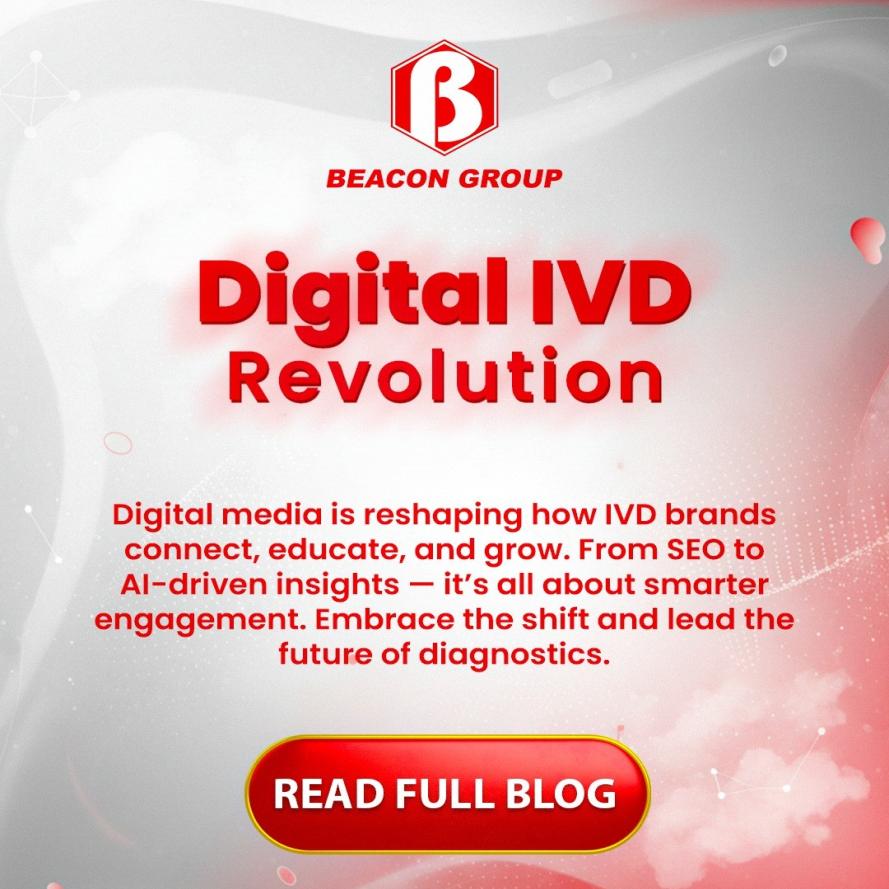
Digital media promotion has created transformative impact on the In Vitro Diagnostics (IVD) market by increasing visibility, building trust with healthcare professionals (HCPs) and IVD companies by enabling them for data-driven strategies. This shift, accelerated after the COVID-19 pandemic, has pushed IVD companies to adopt new digital-first approaches to stay competitive.
social media, search engine optimization (SEO), and content marketing allow IVD manufacturers to reach a broad audience, including HCPs, lab technicians, and informed patients who research health-related topics online. By sharing valuable content, such as webinars, blog posts, and white papers, IVD brands can position themselves as industry experts and build credibility among customers. Digital tools enable highly specific campaigns based on demographics, professional roles, and online behaviour, which improves the effectiveness of marketing efforts. In addition to these Digital platforms make it possible to track key performance indicators (KPIs) like website traffic, engagement, and conversion rates, giving companies a clearer picture of their marketing return on investment (ROI).
IVD companies can use digital channels to provide in-depth information and educational materials on complex topics, helping to inform both patients and clinicians. Webinars and interactive online sessions provide a cost-effective way to educate and engage with HCPs, replacing many traditional in-person events. Digital marketing campaigns generate rich data on customer behaviour and preferences, allowing IVD companies to refine their strategies for better results. Digital media allows companies to focus on the patient journey, offering easy-to-understand product information, testimonials, and support materials that engage patients directly.
Digital promotion helps integrate IVD products into the wider digital health ecosystem. This allows for the collection and analysis of large datasets that can improve population health management and personalize medicine.
IVD companies can use digital platforms to promote data-driven solutions, including real-time patient monitoring systems and companion diagnostics, creating new business models beyond traditional lab-based tests.
The pace of digital and technological change can be hard for some IVD manufacturers to keep up with, requiring continuous learning and adaptation. The use of AI and machine learning will enable increasingly personalized and targeted marketing efforts. It will also provide more predictive insights into customer needs and market trends.
As point-of-care and home-based testing expand, digital promotion will play a crucial role in marketing these convenient, decentralized diagnostic solutions. Future promotion will focus on a seamless, omnichannel experience that integrates digital interactions with traditional sales and service models. The use of augmented reality (AR) and virtual reality (VR) is expected to grow, enabling interactive device demonstrations and virtual training sessions for HCPs.
With more patients becoming active online health consumers, there will be an even greater emphasis on content marketing that informs and educates them, building brand loyalty.
Needles to say, Digital Marketing will be the new benchmark in IVD Product business in coming years and companies getting themselves equipped well with it will surely have an advantage over competitors.

Beacon Group
424, New GIDC, Kabilpore, Navsari, Gujarat 396424 India

Beacon Diagnostics Europe Srl.
Via Aliprandi 41, 20851, Lissone(MB), Italy

Beacon Diagnostics - Spain
C/Sicilia 159, 08013, Barcelona, Spain

Beacon Diagnostics-Philippines
Unit 108 Two Premier 1st St. Alabang Premier, Alabang Zapote Rd, Concha Cruz Drive, Almanza Uno, Las Pinas City