

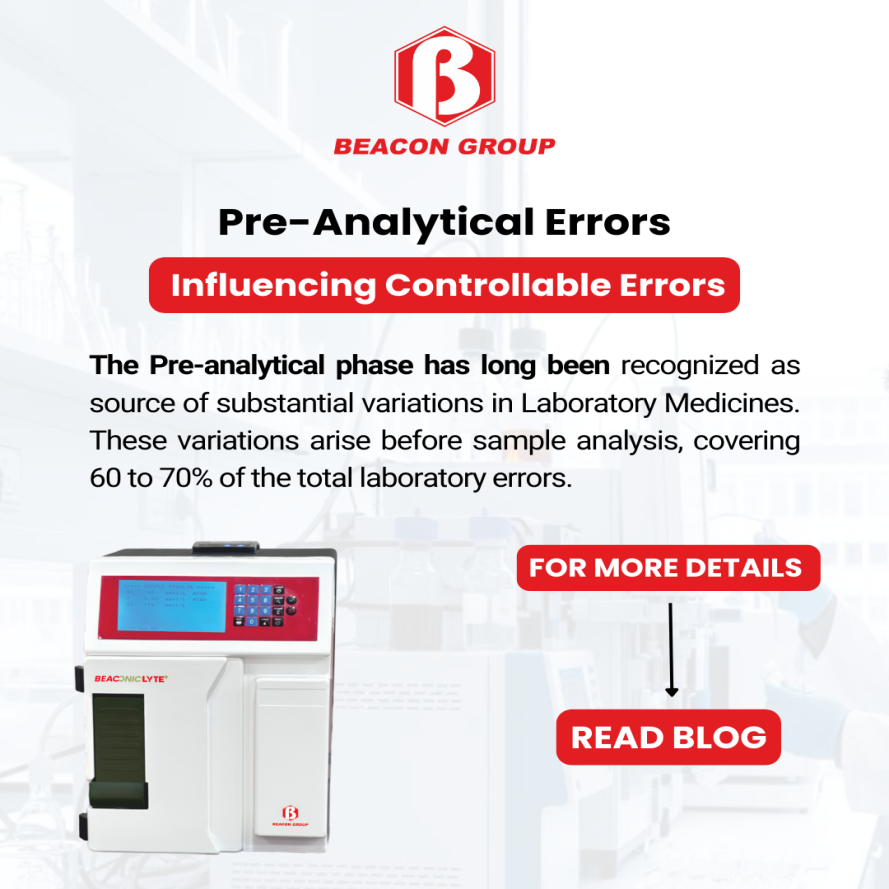
The pre-analytical phase has long been recognized as source of substantial variations in Laboratory Medicines. These variations arise before sample analysis, covering 60 to 70% of the total laboratory errors. As majority of the medical decisions are dependent on the laboratory test results, it is evident to understand and attempt to minimize these variations in test results.
There are numerous pre-analytical factors that may influence the concentrations of the analyte, measuring procedure and finally test results. These factors may be divided in to two major groups like; influencing and interfering factors. Amongst them influencing factors are of the biological origin which effects laboratory results in vivo but can also be derived in vitro while transporting and storing the sample. The major source of the biological factors are ethnicity, diet, alcohol, smoking, drugs etc.
These factors are either present in healthy individual like circadian rhythm, or they occur as side effects due to disease or it’s treatment. These factors may be changeable like Diet, time of sample collection. However unchangeable factors amongst these biological factors are like gender, age, race, ethnicity, or genetic background. Patient action will play an important role to control some of the changeable influencing factors like diet, habitat etc. Several guidelines provide recommendations for effective standardization of patient preparation and sample collections.
Amongst controllable errors Time of sampling matters for all analytes which are subject to biological variation. The effect on result of analyte due to time of collection can induce linear change or cyclic change. Knowledge of time of sample collection is necessary for correct test result interpretation and as such it is an important pre-analytical factor which should be carefully considered. Hence for effective standardization of time of sampling, laboratories should ensure;
Another aspect of Controllable biological factor is related with diet and fluid intake. This may substantially affect the composition of Plasma. Source of nutrient, no of meals can lead to drastic changes in plasma composition. On the other hand, malnutrition, obesity, prolong fasting, starvation may also influence the change of plasma composition.
In normal routine lifestyle, drinking caffeinated beverages like Coffee or Tea or small amount of Alcohol is part of life style. However, these fluid intakes can also greatly influence the change in plasma composition and can affect the results of analyte testing in laboratory medicine.

Beacon Group
424, New GIDC, Kabilpore, Navsari, Gujarat 396424 India

Beacon Diagnostics Europe Srl.
Via Aliprandi 41, 20851, Lissone(MB), Italy

Beacon Diagnostics - Spain
C/Sicilia 159, 08013, Barcelona, Spain

Beacon Diagnostics-Philippines
Unit 108 Two Premier 1st St. Alabang Premier, Alabang Zapote Rd, Concha Cruz Drive, Almanza Uno, Las Pinas City